
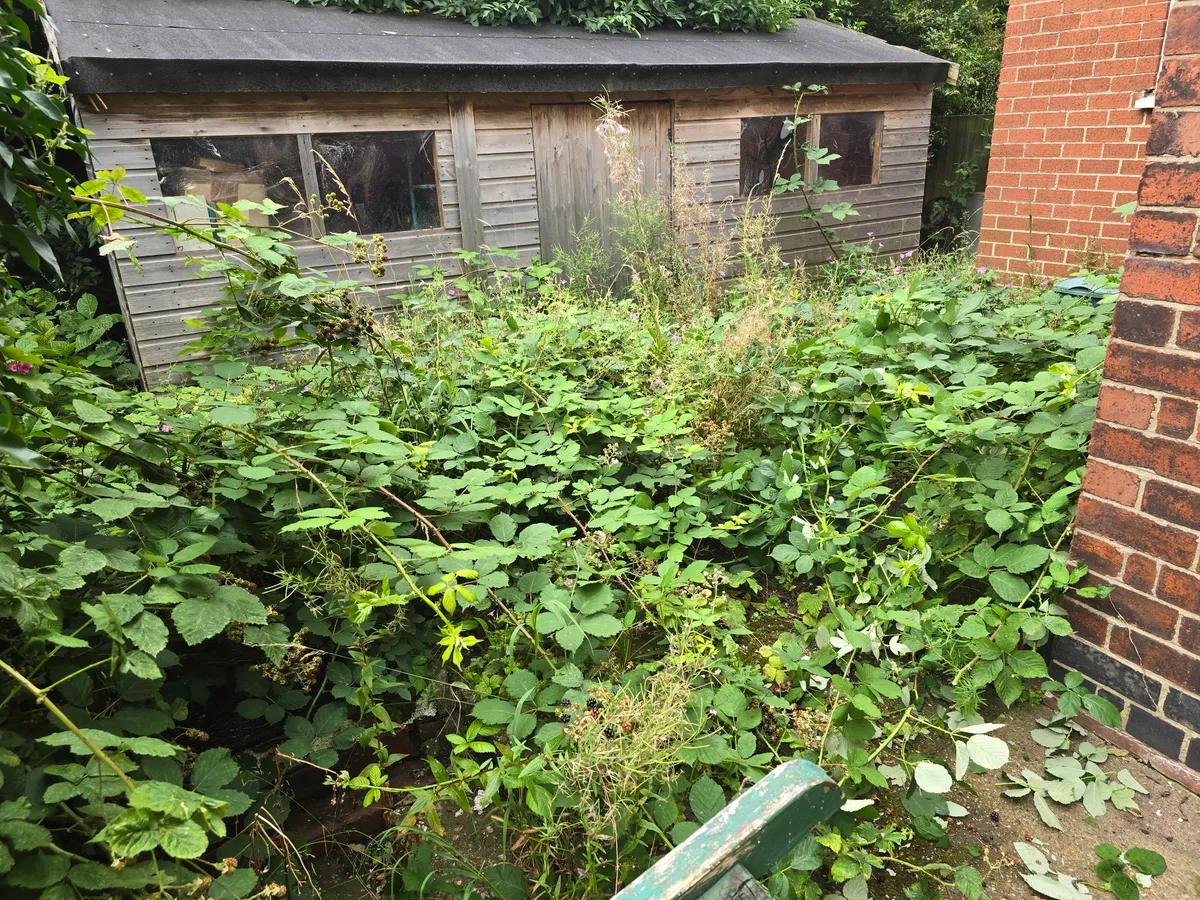
An overgrown garden has a way of getting worse in your head than it is on the ground. You stop going out there, the brambles take another metre, and eventually the whole thing feels unfixable. It never is. We clear gardens across Nottingham and Derby in every state imaginable, and the recovery process is always the same. Here it is, step by step, whether you do it yourself or bring us in.
Step 1: Assess Before You Cut
Walk the garden (wear decent boots) and work out what is actually there. Under the growth you are likely to find paths, beds, a lawn shape, maybe a forgotten patio. Note three things:
- What you want to keep - established shrubs, fruit trees, and hedges can usually be rescued rather than removed, and mature plants are expensive to replace.
- Hazards - broken glass, old fence panels, wire, and uneven slabs hide well in long grass.
- Wildlife - if it is nesting season (March to August), hedges and dense shrubs need checking before any cutting. Hedgehogs also love undisturbed corners; work from one end so anything living there can move out ahead of you.
Step 2: Clear the Surface Layer
Start with everything that is not rooted: rubbish, fallen branches, rotten timber, dead pots. This alone transforms how the garden feels and shows you the true scale of the green work. Bag as you go rather than making one giant pile you have to handle twice.
Bear in mind that garden waste adds up shockingly fast - a moderately overgrown garden can easily fill a dozen builder bags. Check what your local tip will accept per visit, or factor in professional waste removal so it all disappears in one go.
Step 3: Cut the Green Mass Back
Work top down and big to small:
- Brambles and climbers first - cut into manageable sections rather than pulling whole runners; dig the roots or they return next spring.
- Hedges and shrubs second - reduce to a workable size, but resist hard-pruning everything at once outside the right season (our hedge timing guide covers what tolerates a hard cut and when).
- Grass last - long grass cannot be mowed straight off. Strim it down in stages, rake off the cut material, and then mow on the highest setting a week later.
Step 4: Rescue the Lawn
A lawn that has spent a year or more under long grass will look rough after the first cut: yellowed, patchy, full of moss. Do not re-turf in a panic. Cut high and regularly for a month, then scarify, overseed the bare patches, and feed. Most lawns in Nottingham’s clay soil come back well within a single season - our spring lawn care guide covers the full recovery routine.
Step 5: Keep It Reclaimed
The difference between gardens that stay recovered and gardens that revert is simple: little and often. Once the garden is back under control, a fortnightly or monthly maintenance visit costs a fraction of another full clearance, which is exactly why most of our clearance customers move onto a regular maintenance schedule afterwards.
When to Call Someone In
Honest test: if the growth is above waist height across most of the garden, or there is more waste than a car can shift, the DIY route usually costs a few full weekends plus tip runs, hire tools, and a sore back. A professional team clears most overgrown gardens in a single day, waste included.
If you would rather see the transformation than do it, have a look at the before-and-after photos from our recent clearances, including gardens that had been untouched for years. We cover Nottingham and all its suburbs, plus Derby and the wider East Midlands - get a free clearance quote here.